2026 Beijing International Automotive Exhibition
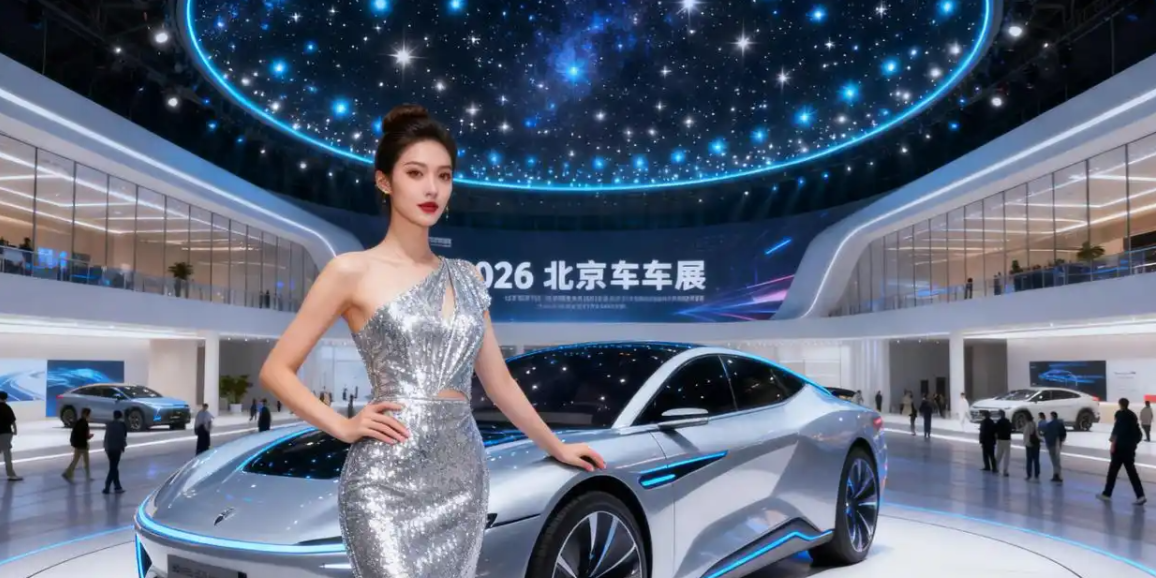
Overview of the Beijing Auto Show 2026
The 19th 2026 Beijing International Automotive Exhibition kicked off from April 24 to May 3 with great enthusiasm. As a top-tier Grade A auto show renowned at home and across the globe, it is held biennially.
With nearly 30 years of development in the automotive industry, the event has evolved into a premier platform for car enthusiasts to preview new models, for automakers to showcase their strength, and for the industry to capture the latest market trends.
The 2026 edition has reached an unprecedented scale! For the first time, it adopted a dual-venue model, covering the China International Exhibition Center (Shunyi Hall) and the Capital International Convention and Exhibition Center.
Spanning a total exhibition area of 380,000 square meters with 17 fully opened pavilions, it has set a new record for the world’s largest auto show in terms of scale. Boasting both massive popularity and high industry value, the exhibition gathered over 2,000 automotive enterprises from 21 countries and regions worldwide.

A total of 1,451 vehicles were on display, including 181 globally debuted new cars and 71 cutting-edge concept cars, alongside more than 200 new product press conferences delivering non-stop highlights.
The exhibition features a comprehensive and well-rounded lineup of brands. It brings together renowned luxury foreign brands.
Such as Mercedes-Benz, BMW and Audi, time-honored domestic Chinese automakers including Hongqi and Geely, as well as popular new energy vehicle startups like BYD, NIO, XPEV and Li Auto. Fuel vehicles, pure electric vehicles, extended-range models and hydrogen energy vehicles all made appearances, fully demonstrating the diverse landscape of the current automotive market.

Participation of Overseas Brands
The Chinese automotive market has long been a crucial battleground for global automakers. The 2026 Beijing Auto Show serves as a key platform for overseas brands to expand their presence in China, with mainstream German, Japanese, American and Korean automakers participating with high-profile and feature-rich exhibits.
German brands stand out as major highlights with top-level investment. Mercedes-Benz presented nearly 40 full-range models with a luxurious lineup.
The all-new pure electric GLC SUV made its global debut, accompanied by the new-generation S-Class sedan and pure electric CLA 260 L, further optimizing its electrified product portfolio to cater to Chinese consumers’ demands.
BMW showcased 16 new vehicles, including 4 global debuts and 8 China debuts. The China-exclusive long-wheelbase iX3 boasts a cruising range of over 900 kilometers and a full-scene intelligent navigation system, delivering outstanding practicality.
Volkswagen also unveiled major updates, announcing that all its new vehicles launched from 2026 will come with factory-installed in-vehicle AI. It also premiered the Zhonghe 08, a new model co-developed with XPEV, outlining its clear new energy vehicle layout for the coming years.

Japanese brands are accelerating localized transformation to adapt to China’s electrification boom. Toyota, Honda and Nissan all participated with senior executives in attendance. Moving beyond traditional fuel vehicles, Japanese brands focused on showcasing advanced hybrid and pure electric technologies.
Honda launched a China-specific pure electric platform with multiple trendy concept cars making their debuts, striving to keep pace with China’s new energy development trend.
American and Korean brands are steadily expanding their layout in the Chinese market. Buick and Cadillac under General Motors debuted multiple new high-end new energy models, including the Buick E7 and Cadillac Cavalier, featuring outstanding appearance and performance.
Ford focused on intelligent driving, displaying its mature L3 autonomous driving solution with strong technological appeal. Hyundai and Kia also launched a host of new pure electric and hybrid vehicles, further increasing their investment in China’s new energy track.

Participation of Chinese Brands
The biggest highlight of this auto show is undoubtedly the strong rise of Chinese independent brands. In particular, domestic new energy brands have taken the center stage, with many occupying entire pavilions.
Their remarkable number of new models and powerful core technologies are fully comparable to international premium brands.
BYD stands as the absolute star of the exhibition, occupying an entire pavilion. Its five major series — Dynasty, Ocean, Denza, Yangwang and Fangchengbao — made a full gathering, covering household vehicles, high-end models and supercars.

A dedicated technology experience zone was set up to showcase its signature technologies: the second-generation Blade Battery supports ultra-fast 5-minute charging and stable battery performance even at minus 30 degrees Celsius; the fifth-generation DM hybrid technology achieves an ultra-low fuel consumption of 2.6L per 100 kilometers in power-loss mode.
Multiple new models including the Tang EV, Seal 08, Denza Z and Yangwang U9 premiered at the show, covering daily commuting, high-end business and high-performance supercar scenarios, fully demonstrating the hardcore strength of domestic new energy vehicles.
Chery Group delivered an equally impressive performance with exclusive use of a full pavilion. Its sub-brands including Chery, Exeed, Jetour, iCAR and Zongheng all made appearances, among which Zongheng, the new high-end plug-in hybrid off-road brand, staged its independent debut and attracted widespread attention.
The globally premiered Exeed EX7 adopts aviation-grade electronic brake-by-wire technology, improving braking response speed by 40% and greatly enhancing safety. Jetour focuses on the “travel-oriented” positioning, launching multiple new hybrid SUVs that perfectly meet the needs of outdoor travel enthusiasts.

Time-honored automakers Geely and Great Wall continue to demonstrate solid strength. Geely showcased its hot-selling series including Zeekr, Lynk & Co and Geely Galaxy. The Lynk & Co 10+ supercar delivers a maximum power of 680kW and can accelerate from 0 to 100km/h in just 3 seconds.
With the average price of all Zeekr models approaching 350,000 RMB, the brand has firmly established itself in the high-end new energy market, breaking the monopoly of foreign brands.
Great Wall Motors displayed nearly 60 vehicles across six brands including Haval, WEY, Tank and ORA, covering new energy hardcore off-road vehicles and intelligent family cars. It achieves dual development of electrified off-road models and intelligent household vehicles with diverse and eye-catching products.

Emerging new energy brands including NIO, Li Auto, AITO and Leapmotor also unveiled their flagship annual models and cutting-edge technologies.
The Li Auto L9 Livis is equipped with a full active suspension and high-computing intelligent driving system; the NIO ES9 features dual flagship chips for upgraded intelligent experience; the AITO M9 continuously optimizes the Hongmeng smart cockpit ecosystem for smoother interactive experience; the Leapmotor D19 stands out with ultra-high cost performance, lowering the entry threshold for flagship SUVs and making high-quality new energy vehicles accessible to more families.
Conclusion
The 2026 Beijing International Automotive Exhibition is a spectacular automotive feast with high industry value, great popularity and widespread attention. Covering 380,000 square meters and displaying 1,451 high-quality vehicles, the exhibition attracted a huge number of visitors and media practitioners.
It recorded a total visitor volume of 1.28 million, including 65,000 overseas professional visitors. Meanwhile, it drew more than 1,000 overseas journalists from 140 countries and hundreds of domestic mainstream media outlets for full coverage, maintaining a high global influence as a world-class automotive event.

The most striking takeaway from the exhibition is the vigorous and rapid development of China’s new energy automotive industry. Chinese automakers have long abandoned the label of “imitators and followers”.
They have achieved independent breakthroughs in core fields including batteries, intelligent driving and chassis control, with new energy vehicles capturing rising market shares and rivaling or even outperforming many foreign brands.
Having shifted from introducing overseas technologies to independent R&D and setting industry standards, Chinese automotive brands are reshaping the competitive landscape of the global automotive industry.
Held biennially, the Beijing Auto Show perfectly aligns with the iteration pace of current automotive technologies and witnesses the transformation and upgrading of China’s automotive industry.
It serves as an excellent platform for Chinese and foreign automakers to exhibit new products and exchange technologies, and bears witness to China’s transformation from a major automotive country to an automotive powerhouse, fully demonstrating the infinite potential of domestic new energy vehicles.
Related Reading
Volkswagen Tharu Price and Review in Algeria!

About the Author