Canton Fair 2026 First Phase

Canton Fair 2026 First Phase
By Anthony Wang | YL Automobile | October 27, 2026
Walking through the vehicle exhibition area at the 140th Canton Fair on October 15, the first thing that struck me was not the cars—though there were plenty of them—but the faces, and the way those faces were shopping.
The usual clusters of West African buyers, the ones who for years have made the auto halls feel like a slice of Lagos or Accra, were noticeably thinner.
In their place, I found a steady stream of Algerian, Tunisian, and Moroccan buyers huddled around pickups and SUVs, Indian dealers taking detailed notes on EV specs, Russian traders negotiating fleet pricing, South American distributors comparing cargo capacity on light trucks—and, more than ever before, buyers who had already done their homework and arrived with a container-sized shopping list.
This is not a story about Africa "leaving" China. It is a story about how the auto trade is restructuring, and anyone in vehicle export who ignores it will be caught flat-footed.

The West African Absence
The decline in Ghanaian and Nigerian foot traffic at this phase is real, but it would be a mistake to read it as a collapse in demand. Three overlapping factors explain the shift.
First, the purchasing model for West African small and mid-sized traders has digitized faster than almost any other region.
The old pattern—fly to Guangzhou, squat in Xiaobei or Sanyuanli, walk the wholesale markets, inspect samples by hand, and fill a container—has been largely replaced by online sourcing platforms, video verification, and consolidated freight forwarding.
For a Nigerian dealer buying auto parts or a handful of used vehicles, the cost of a China trip no longer justifies the marginal benefit when a video call and a sample shipment can accomplish the same verification.
The Canton Fair remains relevant for relationship-building and large orders, but the casual "walk the floor and see what catches my eye" buyer from Lagos is a diminishing species.
Second, the geographic diversification of China's export geography has pulled African buyers away from Guangzhou specifically.
Yiwu now handles a massive share of small-commodity trade with Africa—early 2026 data showed Yiwu's imports and exports with Africa jumping 84.7% year-on-year, making Africa its largest market. Foshan absorbs furniture and building materials buyers.
The African trader who once made Guangzhou their base now distributes sourcing across multiple specialized hubs, visiting Canton Fair only for targeted negotiations rather than as a primary procurement trip.
Third, and most relevant to the auto sector, the composition of African vehicle demand is shifting toward institutional and fleet buyers rather than individual traders.
Government tenders, fleet operators, and established dealership networks in Nigeria and Ghana increasingly send representatives to negotiate directly with manufacturers or authorized exporters like YL Automobile, often outside the Canton Fair window, rather than relying on the small-scale "buy two containers and see how it sells" model. This is a maturation of the market, not a retreat.

Bicycles, E-Bikes, and Mountain Bikes
One of the most striking changes in this phase's traffic was not in the car halls at all—it was the surge of buyers crowding the bicycle, mountain bike, off-road vehicle, and e-bike sections. This year's wave was visibly larger than in previous sessions, and the profile of these buyers is different: they are younger, they are more likely to be e-commerce sellers or regional distributors, and they are buying in mixed containers.
A few things are driving this. E-bikes and e-scooters have become one of China's fastest-growing export categories, and the Canton Fair has become the default venue for overseas distributors to compare battery configurations, motor specs, and certifications before committing to a container. Mountain bikes and off-road recreational vehicles are riding a post-pandemic wave of outdoor spending that has not faded in Europe, the Middle East, or Latin America.
And the buyers themselves are more diverse than ever—I saw African, Middle Eastern, Latin American, and Eastern European buyers all working the two-wheeler aisles, many of them the same traders who used to come only for auto parts.
For anyone in the vehicle export business, this is a reminder that "mobility" is a broader category than passenger cars.
The buyers who could not justify a full container of cars can absolutely justify a mixed container of e-bikes and mountain bikes, and they are doing exactly that.

GAC's Massive Booth: The Anchor of the Auto Hall
Every session, without exception, GAC has the largest booth in the vehicle section. This year was no different.
The GAC stand dominated the hall—multi-vehicle displays, a full lineup of sedans, SUVs, and NEVs, and enough floor staff to handle a constant stream of inquiries.
Whatever one thinks of the brand's export strategy, its presence at Canton Fair is a statement: GAC is not treating this as a minor marketing exercise. It is the anchor tenant of the auto exhibition, and its scale sets the tone for the entire hall.
That scale matters for smaller exporters like us at YL Automobile in a subtler way. When the biggest booth in the hall is a serious OEM, the buyers who walk through the doors arrive with higher expectations about quality, documentation, and after-sales support. That raises the bar for everyone, and it is a bar we welcome.

The New Buyer Behavior
The most important change in this Fair's auto section was not about who was missing—it was about how the buyers who showed up were shopping.
The era of the aimless floor-walker is fading. The buyers I met this year overwhelmingly arrived with a defined requirement: one container, three vehicles, specific models, specific trim levels, and a target price.
They had done their research online, they knew what a container could hold, and they were there to negotiate, not to browse.
This is a healthier market. A dealer buying three cars in a mixed container is a dealer who has already tested the market and knows what sells.
The order is small, but it is repeatable, and it is based on real demand rather than speculation.
And here is the pattern that has become unmistakable: after walking the Fair, most of these buyers want to see the cars in person.
A booth display is not enough. They want to inspect the actual units, check the paint and interior, verify the production dates and VINs, and confirm that the vehicle they are buying is the vehicle they were shown. That is why so many Canton Fair buyers end up traveling to dealer lots and export yards in Guangzhou and the surrounding area after the show closes. When the price is right, deals close fast—sometimes within a day of leaving the Fair.

The Nicaraguan Buyer Who Closed on the Spot
This is not a theoretical pattern for us at YL Automobile. It happened during this session.
A Nicaraguan buyer came out of the Canton Fair with a clear requirement and a wholesale margin to protect. He visited our yard to inspect vehicles in person.
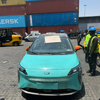
After going through the units, he bought three cars on the spot: two Jetour T1s and one BYD Fang Cheng Bao Tai 7 (钛7). He was genuinely impressed with the quality of the vehicles—the fit and finish, the equipment levels, the overall condition.
But the price negotiation was long. He is a wholesaler, and he made no secret of the fact that he needs room to make his own margin.
We went back and forth for a considerable time. In the end, we found a structure that worked for both sides, and the deal closed.
That is the reality of this business. Quality gets you to the table. Price gets you to the signature. A buyer who is happy with the cars but silent on price is not a buyer yet—he is a negotiator. The Nicaraguan customer was both, and the deal only happened because we could demonstrate real value on the vehicles and still leave him room to profit.
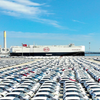
Since the deal closed, we have moved straight into execution: arranging the export documentation and booking ocean freight for the three units.
That is the part of the business most buyers never see, and it is where a sourcing partner earns their keep. A handshake at the yard is worth nothing if the export paperwork is wrong or the container booking slips.

What This Means for YL Automobile and Our Customers
Our business model at ylauto.com has always been built around the reality that vehicle export is not a spot transaction.
It is a sourcing and coordination problem. Whether a dealer in Accra needs twenty SUVs with specific trim levels, a fleet operator in Algiers wants light trucks with extended warranty coverage, or a Nicaraguan wholesaler needs three specific models at a workable margin, the value we provide is not simply "we have cars." It is supplier verification, pre-shipment inspection, documentation accuracy, and logistics coordination that gets the vehicles to port without surprises.
The buyer profile shift at this Fair reinforces that approach. The Algerian dealer who spent twenty minutes asking about after-sales parts availability before discussing price is exactly the kind of customer we want to work with.
The Russian buyer comparing two sourcing partners on their inspection protocols understands that the cheapest quote often carries the most risk.
And the Nicaraguan wholesaler who haggled hard but bought quality is the model of the new Canton Fair buyer: informed, demanding, and ready to move when the deal is right.
For our existing West African partners, the message is that we are still here, still sourcing, and still shipping.
The reduction in casual foot traffic does not mean the trade has stopped. It means the serious buyers are working through established channels and direct relationships rather than walking the floor hoping to stumble onto a good deal.

Looking Ahead
The Canton Fair remains an irreplaceable venue for reading the market's pulse. This first phase told us that the auto export business is professionalizing on both sides of the table. Buyers are more specialized, more demanding on quality and compliance, and more geographically diverse than at any point in the past five years.
The two-wheeler and off-road categories are booming alongside passenger cars. GAC's massive booth sets a quality benchmark for the whole hall. And the buyers who matter are arriving with a container-sized plan and a willingness to close fast when the product and the price are right.
For YL Automobile, the path is clear: keep doing the unglamorous work of supplier vetting, inspection coordination, and export logistics that turns a buyer's inquiry into a delivered vehicle. The faces at the Fair will keep changing. The fundamentals of reliable sourcing will not.
If you are interested in the content of the article, please do not hesitate to contact us for more vehicle related information:YL Automobile

Related Reading
Chery Tiggo 5x—A Chinese car’sMarvel!
GAC Trumpchi GS3 Price and Review!
Anthony Wang is the founder of YL Automobile (www.ylauto.com), a China-based vehicle and machinery sourcing and export partner serving dealers, fleet operators, and distributors in emerging markets.
About the Author